Industrial operations rely on stable, safe, and controllable electrical distribution to keep processes running without interruption. In modern plants, enclosed switchgear plays a central role in protecting equipment, managing power flow, and safeguarding personnel from electrical hazards. As facilities grow more automated and energy intensive, advanced switchgear systems have become essential infrastructure rather than optional upgrades.
The Critical Role of Power Distribution in Industry
Manufacturing plants, processing facilities, data centers, and utilities operate on complex electrical networks that must deliver power reliably to multiple loads at varying voltages. Any instability in distribution can halt production, damage machinery, or create safety risks.
Switchgear serves as the control and protection hub within this network. It regulates power flow, isolates faults, and ensures that only healthy circuits remain energized. Without it, industrial power systems would lack coordination and protection, leaving equipment and workers exposed to dangerous conditions.
Modern industrial environments demand systems that can handle high currents, frequent switching operations, and harsh operating conditions. Advanced switchgear meets these requirements through improved materials, intelligent monitoring, and robust design.
Understanding Advanced Switchgear Systems
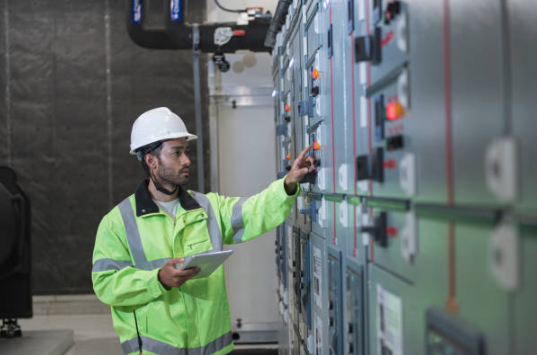
Advanced switchgear refers to engineered assemblies of circuit breakers, disconnectors, relays, and protective devices housed in secure enclosures. These systems are designed for higher reliability, automation compatibility, and enhanced safety compared to traditional open configurations.
Key characteristics include:
- Metal enclosed or insulated housings that prevent accidental contact with live components
- Integrated protection relays for precise fault detection
- Remote monitoring and control capabilities
- Modular construction for scalability and maintenance
- Arc resistant design to contain internal faults
These features allow industrial operators to maintain tight control over electrical infrastructure while minimizing downtime and risk.
Enhancing Operational Safety
Electrical safety is a top priority in industrial settings where high voltage and heavy machinery coexist. Advanced switchgear systems are designed to reduce both direct and indirect hazards associated with electrical distribution.
Enclosed construction prevents exposure to energized parts and contains arcs or faults within compartments. Interlocking mechanisms ensure that equipment cannot be opened or operated in unsafe conditions. Grounding switches provide safe discharge paths for residual energy during maintenance.
Arc resistant switchgear further enhances safety by channeling fault energy away from operators. In the event of an internal arc, pressure relief vents and reinforced structures direct hot gases upward rather than outward. This containment significantly reduces injury risk and equipment damage.
Minimizing Downtime and Production Losses
Unplanned outages are costly for industrial facilities. Even short interruptions can disrupt continuous processes, spoil materials, or damage sensitive equipment. Advanced switchgear helps maintain uptime through fast fault isolation and system segmentation.
When a fault occurs, protective relays detect abnormal currents and trigger circuit breakers within milliseconds. Only the affected section is disconnected, allowing the rest of the plant to continue operating. This selective coordination is critical for large facilities with interconnected loads.
Reliability is further improved through:
- Redundant protection schemes
- Condition monitoring sensors
- Predictive maintenance alerts
These capabilities allow operators to identify potential issues before they escalate into failures.
Supporting High Power and Heavy Loads
Industrial machinery often requires high starting currents and continuous heavy load operation. Motors, compressors, furnaces, and process equipment place significant demand on electrical distribution systems.
Advanced switchgear is engineered to withstand these stresses without overheating or mechanical degradation. High interrupting capacity breakers safely clear large fault currents, while busbar systems distribute power evenly across circuits.
Thermal management and insulation technology ensure stable performance even in high temperature or dusty environments. This durability makes advanced switchgear suitable for sectors such as steel manufacturing, mining, oil and gas, and chemical processing.
See also: Common Mistakes Small Businesses Make in Local Listings
Integration with Automation and Smart Systems
Modern industrial facilities are increasingly automated and data driven. Electrical infrastructure must integrate seamlessly with control systems, monitoring platforms, and energy management software.
Advanced switchgear supports this integration through digital relays and communication interfaces. These components transmit real time data on load levels, breaker status, and fault events to supervisory control systems.
Operators gain visibility into power distribution across the facility, enabling better decision making and faster response to anomalies. Automated switching sequences can also be implemented to manage load transfers or backup power activation without manual intervention.
This connectivity transforms switchgear from passive hardware into an intelligent node within the industrial control network.
Improving Energy Efficiency and Load Management
Energy costs are a major operational expense for industrial facilities. Efficient distribution and load control help reduce waste and optimize power usage.
Advanced switchgear contributes to energy management by enabling precise load segmentation and monitoring. Facilities can track consumption at different process stages and identify inefficiencies or imbalances.
Load shedding schemes can be programmed to disconnect noncritical equipment during peak demand periods. This prevents overloads and reduces utility penalties. Power factor correction and harmonic mitigation devices can also be integrated within switchgear assemblies to improve overall efficiency.
These capabilities support sustainability goals and regulatory compliance while lowering operational costs. To browse advanced switchgear systems, visit Meta Power Solutions.
Facilitating Maintenance and Lifecycle Management
Industrial electrical systems must remain operational for decades. Maintenance accessibility and component longevity are therefore essential design considerations.
Advanced switchgear is built with modular compartments and withdrawable breakers that simplify inspection and replacement. Technicians can service individual sections without shutting down the entire system.
Condition monitoring sensors track temperature, insulation health, and mechanical wear. Maintenance teams receive alerts when parameters deviate from normal ranges, allowing planned intervention rather than reactive repair.
Benefits include:
- Reduced maintenance downtime
- Extended equipment lifespan
- Lower repair costs
- Improved workforce safety
Lifecycle management becomes more predictable and cost effective with these features.
Compliance with Industrial Standards and Regulations
Industrial facilities must comply with strict electrical safety and performance standards. Regulatory frameworks govern equipment design, installation, and operation to prevent accidents and ensure reliability.
Advanced switchgear systems are engineered to meet international and industry specific standards related to insulation, fault tolerance, and arc containment. Certification ensures that assemblies can handle rated voltages and currents under defined conditions.
Compliance provides assurance to plant operators, insurers, and regulators that electrical infrastructure meets accepted safety benchmarks. It also simplifies inspections and approvals during facility expansion or upgrades.
Adaptability for Expanding Facilities
Industrial operations rarely remain static. Production capacity increases, new machinery is added, and processes evolve over time. Electrical infrastructure must accommodate these changes without major disruption.
Modular switchgear designs allow additional feeder units or protection modules to be integrated into existing lineups. Busbar extensions and compartment expansions enable capacity growth without replacing the entire system.
This scalability supports long term facility development while protecting initial investment. It also allows phased upgrades as technology advances or power demands increase.
Resilience in Harsh Industrial Environments
Industrial sites often expose electrical equipment to dust, moisture, vibration, and extreme temperatures. Such conditions accelerate wear and increase failure risk in conventional open systems.
Advanced switchgear uses sealed enclosures, corrosion resistant materials, and robust insulation to withstand these environments. Gasketed compartments prevent contamination, while reinforced frames resist mechanical stress.
Environmental resilience ensures consistent operation in challenging sectors such as mining, marine facilities, wastewater treatment, and outdoor substations. Reliable performance under harsh conditions is a major reason industrial facilities depend on advanced switchgear.
Supporting Renewable and Distributed Energy Integration
Many industrial facilities are adopting onsite generation such as solar arrays, wind turbines, or cogeneration plants. Integrating these sources into existing electrical networks requires precise control and protection.
Advanced switchgear enables safe connection and synchronization of multiple power sources. Protection relays manage bidirectional power flow and prevent backfeeding during faults.
Switching schemes can prioritize renewable generation when available and transition smoothly to grid supply when needed. This flexibility supports energy independence and sustainability initiatives without compromising system stability.
The Economic Value of Advanced Switchgear
While advanced switchgear represents a significant capital investment, its economic benefits extend across the facility lifecycle. Reliable power distribution reduces downtime losses, protects expensive machinery, and lowers maintenance costs.
Operational continuity alone can justify investment in high performance switchgear for industries where production interruptions are extremely costly. Safety improvements also reduce liability exposure and insurance premiums.
Over time, improved efficiency and predictive maintenance capabilities contribute to measurable cost savings. These factors make advanced switchgear a financially sound component of industrial infrastructure.
Future Trends in Industrial Switchgear Technology
Industrial electrical systems continue to evolve alongside digitalization and sustainability initiatives. Advanced switchgear is incorporating new technologies that enhance performance and intelligence.
Solid state switching devices offer faster operation and reduced mechanical wear. IoT enabled sensors provide deeper insights into equipment health and energy usage. Artificial intelligence algorithms analyze operational data to predict faults and optimize load distribution.
Eco friendly insulation alternatives are replacing traditional gas based systems to reduce environmental impact. Compact designs allow installation in space constrained facilities without sacrificing capacity.
These trends indicate that switchgear will become increasingly integrated with smart industrial ecosystems, further reinforcing its importance in modern facilities.
Conclusion
Industrial facilities depend on advanced switchgear systems because they provide the safety, reliability, and control required for complex power distribution. From fault isolation and automation integration to environmental resilience and scalability, these systems support every aspect of industrial electrical infrastructure.
As industries expand and electrification intensifies, the role of advanced switchgear continues to grow. It safeguards operations, protects assets, and ensures consistent energy delivery across demanding environments. For modern industrial facilities, advanced switchgear is not merely equipment but a foundational element of operational stability and long term performance.