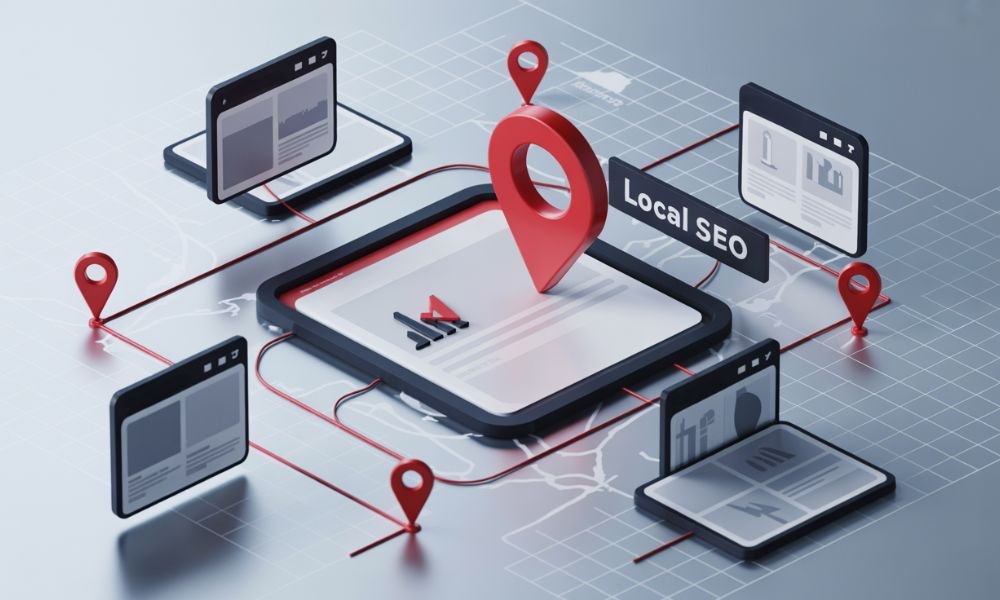
Businesses that serve customers in specific cities, towns, or neighborhoods need an effective way to communicate their services and geographic coverage online. One useful strategy is creating dedicated landing pages that address the needs of customers in different locations. When developed correctly, these pages can help businesses improve search visibility, provide relevant information, and generate more qualified inquiries.
Local landing pages are particularly valuable for companies that operate across several service areas. A plumbing company, cleaning business, real estate agency, or professional service provider may have customers in multiple locations but only one main website. Dedicated pages can help explain what the business offers in each area and make it easier for visitors to find relevant information.
What Are Local SEO Landing Pages?
Local SEO landing pages are website pages created to target customers searching for specific services within a geographic area.
For example, a company providing home cleaning services in several cities may create individual pages describing its services in each location.
These pages can include service descriptions, local coverage information, customer testimonials, frequently asked questions, and contact details.
Their purpose is to provide useful information to local visitors while helping search engines understand the relationship between the business, its services, and the areas it serves.
Why Local Landing Pages Matter
Search engines aim to provide relevant results based on the user’s search intent and location.
A person searching for a service in a particular city generally wants information about providers that actually serve that area.
A dedicated location page can help communicate this relevance.
Well-developed local SEO landing pages can also improve the visitor experience by answering location-specific questions and providing clear contact options.
However, simply creating many pages with city names does not guarantee better rankings. Each page should provide meaningful information.
Understanding Local Search Intent
Before creating a location page, businesses should understand what customers are searching for.
Some users may be looking for a specific service, while others want prices, availability, opening hours, or information about service coverage.
Keyword research can identify relevant phrases and common questions.
For example, a roofing business might discover that customers search for roof inspections, emergency roof repairs, and residential roofing services in their area.
The landing page should address the most relevant needs instead of repeating keywords unnecessarily.
Essential Elements of a High-Quality Local Landing Page
A Clear Page Title
The page title should describe the service and geographic area.
A descriptive title helps users understand what the page offers before visiting it.
Useful Introduction
The opening section should explain the service, the location served, and the main benefit available to customers.
Visitors should immediately understand whether the company can help them.
Detailed Service Information
A location page should describe the actual services available in that area.
Businesses can explain common customer needs, service options, processes, and important considerations.
Accurate Contact Information
Contact information should be easy to find.
Businesses may include a phone number, contact form, booking link, and other relevant details.
Genuine Customer Testimonials
Authentic customer feedback can help visitors understand the company’s service quality.
Testimonials should be genuine and should not be fabricated to make individual location pages appear more authoritative.
Frequently Asked Questions
FAQs can address common questions about pricing, scheduling, availability, service coverage, and other customer concerns.
Answers should be useful and specific.
Creating Location-Specific Content
Content quality is one of the most important considerations when developing location pages.
Businesses should avoid copying the same text across multiple pages and changing only the city name.
Instead, each page should include information relevant to the area.
This may involve describing the services available, explaining local service coverage, and answering questions that customers in that market commonly ask.
The goal is to create pages that are genuinely useful even if visitors arrive without knowing anything about the company.
Local Landing Page Optimization Best Practices
Local landing page optimization should begin with a clear understanding of the page’s purpose.
Businesses should identify the primary service, target geographic area, and expected customer action.
The page should have a descriptive title, relevant headings, original content, and appropriate internal links.
Images should be relevant and properly optimized.
Mobile usability is also important because many local searches happen on smartphones.
Pages should load efficiently, display information clearly, and make contacting the business simple.
The Importance of Internal Linking
Internal links connect location pages with other relevant sections of a website.
For example, a city-specific service page may link to the company’s main service page, contact page, or relevant educational guide.
This helps visitors discover additional information and allows search engines to understand website relationships.
Internal links should be descriptive and placed where they genuinely help users.
Mobile-Friendly Design
Local customers frequently use mobile devices when searching for nearby services.
A page that is difficult to read or navigate on a smartphone may cause visitors to leave before contacting the business.
Businesses should use readable text, clear headings, accessible navigation, and visible contact options.
Buttons and forms should work properly on different screen sizes.
Building Trust Through Local Information
Visitors want to know whether a business is legitimate and capable of providing the service they need.
A location page can build trust by presenting accurate business information, genuine testimonials, relevant photographs, and clear service descriptions.
If the company has a physical office in the target location, it should provide the correct address.
If it serves the area remotely or through mobile appointments, the page should explain that arrangement accurately.
Businesses should never create fake addresses to target locations where they have no legitimate presence or service coverage.
Measuring Landing Page Performance
Businesses should monitor how visitors interact with their location pages.
Useful indicators include organic impressions, search clicks, page visits, contact form submissions, phone calls, and conversions.
Google Search Console can help identify search queries and page visibility.
Google Analytics can provide information about user behavior and conversion events.
Performance data helps businesses identify which pages attract relevant visitors and which need improvements.
Creating useful location-specific website content can help businesses connect with customers searching for nearby services. Arc4 recognizes the importance of developing relevant landing pages that communicate service availability, geographic coverage, and clear contact options. Well-organized local pages can improve the visitor experience and provide additional opportunities to attract qualified inquiries.
Common Mistakes to Avoid
One common mistake is creating dozens of nearly identical pages with minimal location-specific information.
Another is placing too many keywords in headings and paragraphs.
Businesses should also avoid broken contact forms, outdated business information, and slow-loading images.
Every location page should have a clear purpose and provide genuine value.
See also: Why Local Businesses in Rockland, Westchester, and Bergen Can’t Afford to Ignore IT Security Anymore
Conclusion
Local SEO landing pages can help businesses reach customers in different geographic markets by providing relevant service information and location-specific content.
A successful page should address customer needs, communicate geographic coverage, and make contacting the business straightforward.
By applying local landing page optimization principles and maintaining useful, original content, companies can improve the visitor experience and strengthen their local search presence.
The most effective strategy focuses on quality rather than creating large numbers of repetitive pages.