As we age, our eyes naturally undergo changes. Around the age of 40, many people begin to notice that reading a text message, looking at a menu, or working on a laptop requires holding the object further away. This common condition is called presbyopia (the gradual loss of your eyes’ ability to focus on nearby objects).
Decades ago, the only solution to this problem was swapping between multiple pairs of glasses or wearing lined bifocals. Today, optical technology has advanced significantly, offering seamless solutions like progressive lenses.
If you are trying to decide between progressives and traditional multi-lens options, this comprehensive guide will break down the differences, pros, cons, and costs to help you make an informed decision.
Understanding the Lens Types: The Basics
To choose the right multi-lens eyewear, it is essential to understand exactly how each type of lens distributes your prescription.
1. Traditional Bifocals
Bifocals are divided into two distinct parts. The upper section corrects your distance vision (driving, watching TV), while a small, visible segment at the bottom corrects your near vision (reading, sewing).
2. Traditional Trifocals
Trifocals add a third zone for intermediate vision (computer screens, car dashboards). This creates two visible lines across the lens, dividing it into near, intermediate, and distance viewing sections.
3. Progressive Lenses (No-Line Multifocals)
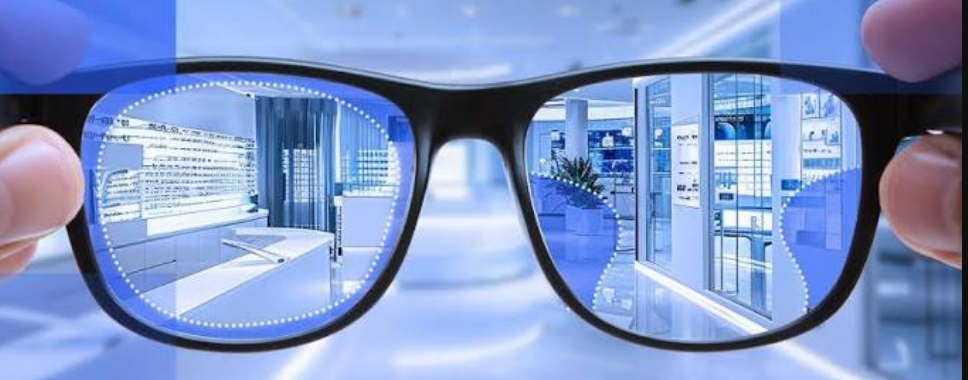
Progressive lenses offer a modern, line-free approach. Instead of separate segments divided by harsh lines, progressives feature a smooth, gradual transition of lens power. As your eyes move down the lens, the power changes smoothly from distance to intermediate, and finally to near vision.
Progressive Lenses vs. Traditional Bifocals & Trifocals
While all multi-lens options aim to help you see clearly at different distances, their design and user experience differ massively. Let’s compare them across key factors:
1. Aesthetic Appearance
- Traditional Options: Bifocals and trifocals have distinct, visible lines cutting across the glass. Many people feel these lines make them look older, as they are traditionally associated with aging eyes.
- Progressive Lenses: Progressives look exactly like regular single-vision lenses. There are no telltale lines, giving your eyewear a clean, youthful, and modern appearance.
2. Visual Transitions (The “Image Jump” Effect)
- Traditional Options: When your eyes cross the physical line in a bifocal or trifocal, the image suddenly shifts or “jumps.” This sudden transition can be disorienting when walking down stairs or looking from the road to your dashboard.
- Progressive Lenses: Because the transition is gradual, there is no image jump. Your eyes adjust naturally as you look up and down, mimicking natural human vision.
3. Intermediate Vision Support
- Bifocals: Standard bifocals skip intermediate vision entirely. If you spend hours looking at a computer screen (which sits right in that mid-distance sweet spot), traditional bifocals can cause neck strain because you have to lean forward to find focus.
- Progressive Lenses: Progressives naturally include a wide intermediate zone. This makes them the ultimate choice for desk workers, digital artists, and anyone using computers daily.
4. Peripheral Vision and Distortion
- Traditional Options: Bifocals offer clear, crisp vision all the way to the edges of the specific segments because the lenses are cut flat.
- Progressive Lenses: Because multiple prescriptions are engineered into a single seamless lens, progressives have soft areas of mild distortion on the outer left and right edges (the periphery). Users must learn to turn their head rather than just casting their eyes sideways to see clearly.
Comparison Table: At a Glance
| Feature | Traditional Bifocals | Traditional Trifocals | Progressive Lenses |
| Visible Lines | Yes (Distinct line) | Yes (Two distinct lines) | No (Completely seamless) |
| Vision Zones | Distance & Near only | Distance, Mid, & Near | Full, smooth gradient |
| Image Jump | High | High | None |
| Computer Work | Poor (No mid-zone) | Moderate | Excellent |
| Learning Curve | 1 to 3 days | 2 to 5 days | 1 to 2 weeks |
| Cost | Budget-friendly | Moderate | Premium |
The Adaptation Period: What to Expect
Switching to multi-lens eyewear requires your brain and eyes to learn a new way of processing information.
Traditional bifocals are relatively easy to adapt to because the boundaries are clear. Progressive lenses, however, require a bit of patience. Because the correct prescription depends on where your eyes look through the lens, you have to practice “pointing with your nose.”
During the first 7 to 14 days of wearing progressives, you might experience mild dizziness or depth-perception changes. However, once your brain maps out the lens zones, the experience becomes completely subconscious and natural.
Which One Should You Choose?
The decision ultimately comes down to your daily lifestyle, profession, and budget.
Choose Progressive Lenses if:
- You want a modern look without aging lines on your glasses.
- You work on computers or switch between tasks at various distances frequently.
- You want a single pair of glasses that can handle driving, office work, and reading seamlessly.
Choose Traditional Options if:
- You have a limited budget and need a cost-effective solution.
- You cannot adapt to the peripheral distortion found in progressive designs.
- Your job requires constant, wide-angle peripheral vision at close distances.
See also: Common Mistakes Small Businesses Make in Local Listings
Frequently Asked Questions (FAQs)
Q1: Why are progressive lenses more expensive than standard bifocals?
Progressive lenses use highly advanced, digital surfacing technology to customize the gradient power exactly to your eye measurements. This complex manufacturing process makes them more expensive than cutting traditional, simple lined lenses.
Q2: Can I get progressive lenses for sunglasses?
Absolutely. Progressive prescriptions can be added to standard sunglasses, polarized lenses, and transition (photochromic) lenses, making them perfect for outdoor activities like driving or golfing.
Q3: How long does it take to get used to progressive lenses?
Most people adapt within 1 to 2 weeks. However, for some individuals, it can take up to a month. Wearing them consistently every day—rather than switching back to old glasses—speeds up the adaptation process significantly.
Q4: Do progressive lenses cause headaches?
During the initial adaptation phase, minor eye strain or headaches can happen as your brain adjusts. If these symptoms persist past three weeks, visit your optometrist, as the lens alignment or prescription might need a slight adjustment.
Q5: Can any frame hold progressive lenses?
Most frames can, but it is best to avoid very small or aviator-style frames. Progressive lenses need a certain amount of vertical space (usually a minimum corridor height of 14–18mm) so that all three vision zones (distance, intermediate, near) can fit comfortably within the glass area.