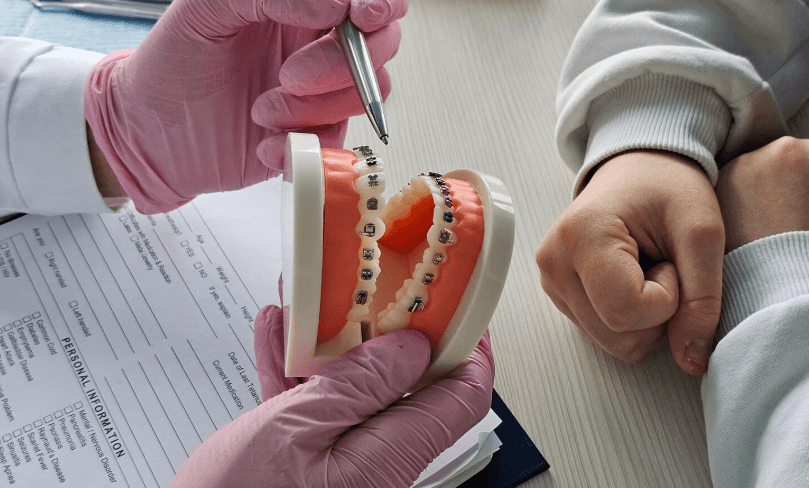
You might not think about it when you sit in the chair, ask about clear aligners, or wonder whether braces will take eighteen months or two years, but there is a quiet question behind every treatment plan. How does your Whittier orthodontist know what works now, not just what worked years ago? That question matters, because orthodontic care is not static. Materials change, imaging improves, and treatment planning keeps getting sharper. If you have ever worried about whether your care reflects current standards, that concern makes sense.
The short answer is this. Orthodontists stay current through continuing education, peer reviewed research, clinical training, professional organizations, and careful review of patient outcomes. In other words, how orthodontists stay updated on the latest techniques comes down to ongoing learning, not a one time degree. And if you are trying to choose an orthodontist, knowing what that learning looks like can help you ask better questions and feel more at ease.
Why does staying current matter so much in orthodontic care?
Orthodontic treatment often lasts months or years, so small decisions can shape your result in a big way. The type of brackets used, the sequence of wires, the use of digital scans instead of old style impressions, and the timing of treatment for children all affect comfort, cost, and outcome. Because of this, an orthodontist who keeps learning is often better prepared to offer options that fit your needs rather than relying on habit alone.
So, what happens if a provider does not keep up? You may still receive acceptable care, but you could miss out on methods that improve precision, shorten chair time, or reduce discomfort. That does not mean every new technique is automatically better. It means good orthodontists weigh new ideas against evidence, then apply them with judgment.
This is especially important because orthodontics sits inside a larger health picture. Tooth movement depends on bone biology, gum health, growth patterns, and patient habits. If you want a plain language overview of that science, the National Library of Medicine offers a helpful summary on orthodontic treatment and tooth movement principles. Research like this gives orthodontists the biological foundation behind the mechanics you see in the office.
How do orthodontists learn new techniques without chasing every trend?
That tension is real. Patients want modern care, but no one wants to be a test case for a flashy idea that has not proven itself. The best orthodontists manage this by balancing curiosity with caution. They attend structured courses, review published studies, and compare new methods against long term results.
One of the clearest ways they do this is through formal continuing education. The American Association of Orthodontists provides continuing education for orthodontists that covers clinical updates, treatment planning, technology, and patient care. These programs are not just about collecting hours. They help orthodontists refine judgment, test assumptions, and learn from experts who focus on specific techniques every day.
Then there is the research side. Orthodontists who want to stay sharp often read specialty journals and evaluate new findings before changing how they practice. The American Journal of Orthodontics and Dentofacial Orthopedics is one of the leading sources for this kind of peer reviewed information. That matters because a polished marketing claim is not the same as evidence. A journal article can show whether a new appliance really improves tooth control, whether aligners perform as promised in certain cases, or whether a treatment approach works only for a narrow group of patients.
Orthodontic continuing education also happens in less visible ways. Case reviews with colleagues, study clubs, conferences, manufacturer training on new systems, and post treatment audits inside the practice all help. An orthodontist may ask, did this plan finish as expected, did this patient struggle with compliance, and could a different method have improved the result? That kind of reflection is where growth often happens.
What signs show an orthodontist is committed to current methods?
If you are trying to read between the lines, it helps to know what active learning looks like in real life. It is not just a website saying the office uses advanced technology. It is a pattern of behavior.
| What to Look For | What It Can Mean for You |
|---|---|
| Regular continuing education and specialty memberships | The orthodontist is investing time in current standards and new treatment methods |
| Use of peer reviewed research in explanations | You are hearing evidence based recommendations, not just opinions or sales language |
| Comfort discussing both benefits and limits of a treatment | The provider is thinking critically, not pushing one option for everyone |
| Digital tools used with clear reasoning | Technology is supporting care, not replacing sound clinical judgment |
| Before and after cases that match your situation | You get a more realistic sense of what the office treats often |
Why does this matter so much? Because staying current in orthodontics is not about collecting gadgets. It is about knowing when a tool helps, when it does not, and how to adapt treatment to the person in front of you.
What can you do right now if you want an orthodontist who keeps learning?
1. Ask how they stay current.
You do not need a technical script. Simply ask what kinds of courses, conferences, or journals they rely on. A thoughtful answer usually sounds calm and specific. It may mention recent training, new evidence, or why the doctor uses certain systems and avoids others.
2. Ask why a treatment option fits your case.
This is one of the best filters. A strong answer should connect your bite, goals, age, and dental health to the plan. If someone can explain why braces, aligners, or another orthodontist service makes sense for you, that is a good sign they are not using a one size fits all approach.
3. Notice whether the office welcomes questions.
People often feel rushed in health settings, and that can make it harder to speak up. Still, the way a team responds tells you a lot. An office that values patient education is often an office that values learning in general. Curiosity tends to show up on both sides of the chair.
See also: How CPAs Use Analytics To Improve Business Forecasting
So where does that leave you when choosing orthodontic care?
You do not need to become an expert to make a wise decision. You just need to know that good orthodontic care depends on ongoing study, careful review of evidence, and a willingness to adapt when better methods are supported by real results. That is the heart of how modern orthodontic techniques reach patients in a responsible way.
If you are comparing providers, trust the questions that keep coming to mind. Ask how they learn, how they evaluate new approaches, and how they tailor treatment to your case. Those answers can tell you a great deal, and they can help you move forward with more confidence and less guesswork.